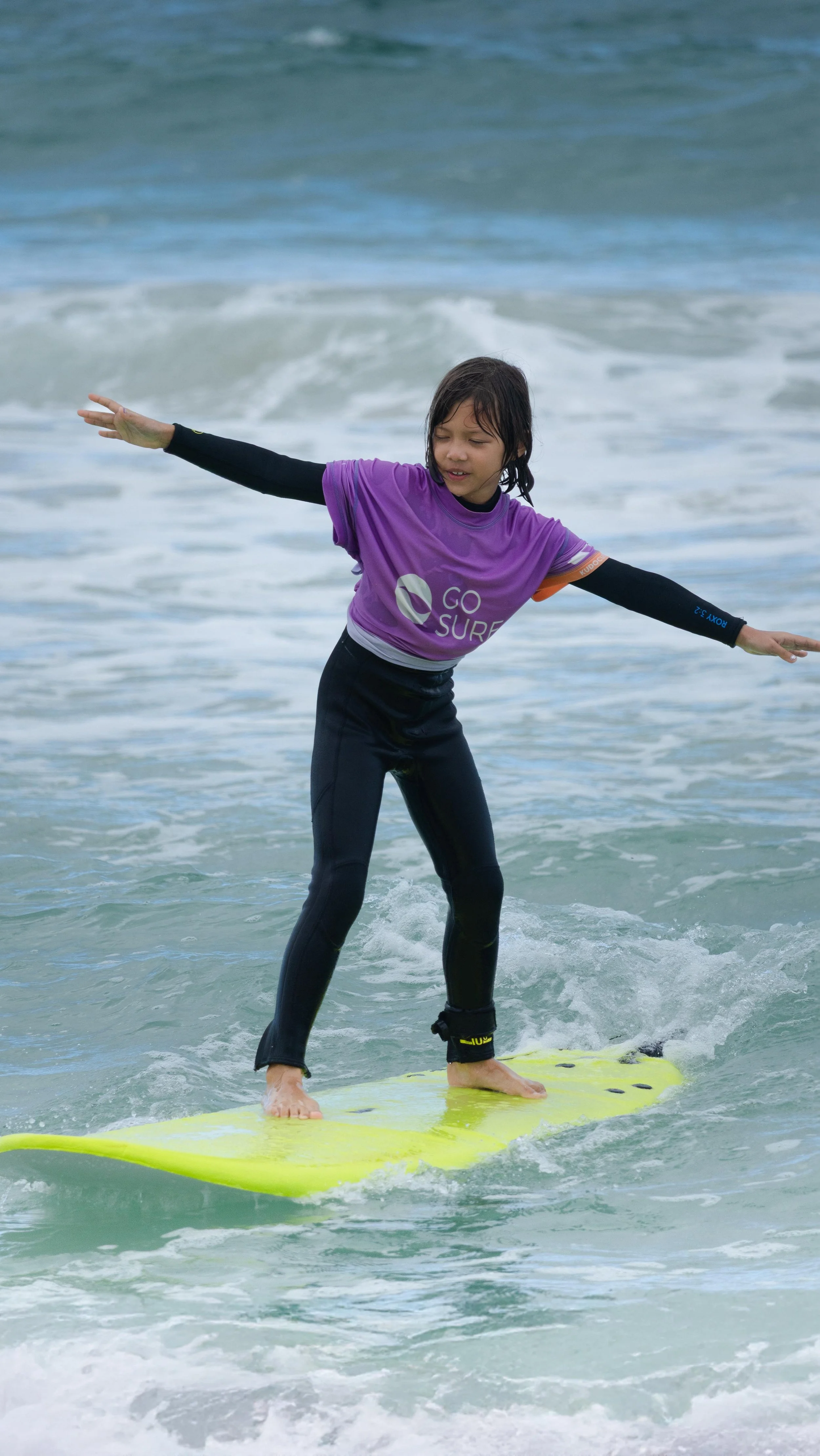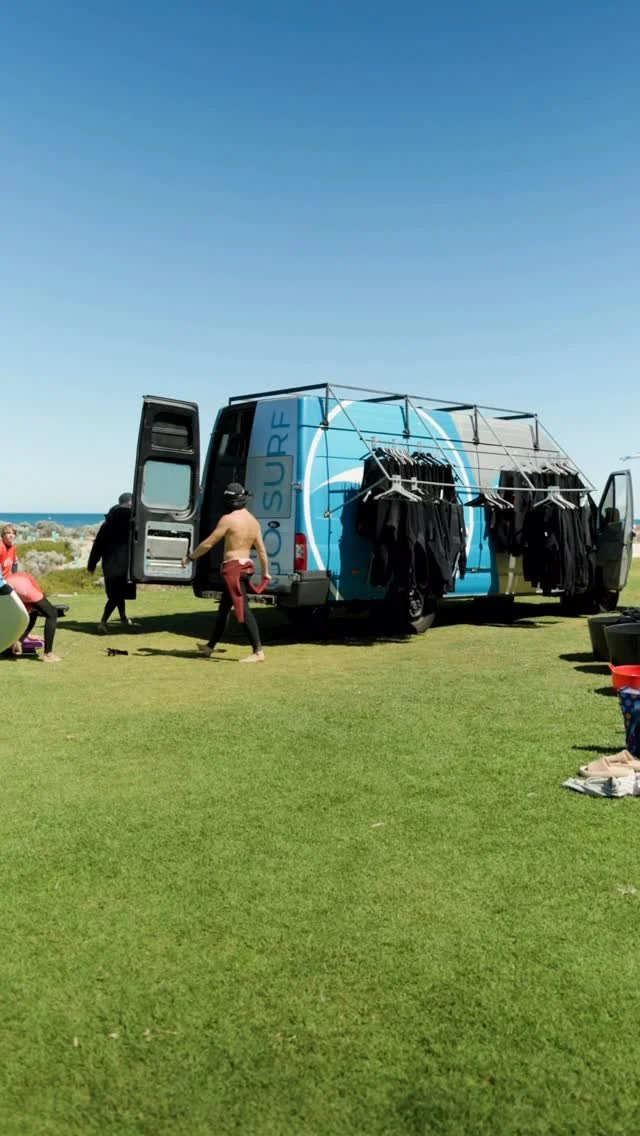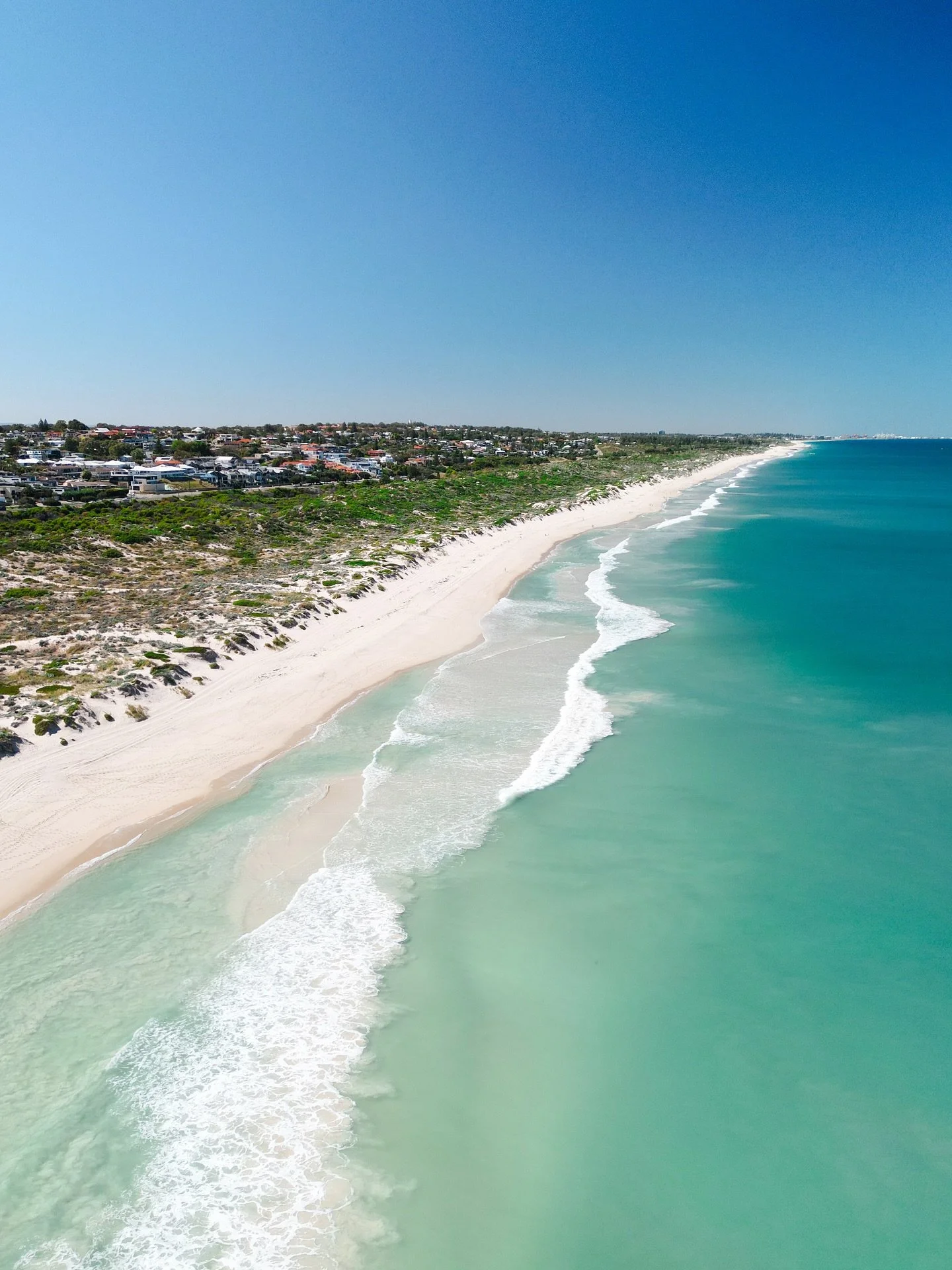
The short answer: we follow the best waves for beginner surfers — and in Perth, those waves are in completely different places depending on the time of year. Here's the full story behind why we're at Brighton Beach in summer and Leighton Beach in winter, and why it makes your surf lesson significantly better.
If you've tried to book a lesson and wondered why we're not at Leighton in January, or why we've packed up from Brighton by June — you're not alone. It's one of the most common questions we get.
The move isn't random, and it's not about us chasing sunnier skies. It comes down to four very specific things: swell, sandbanks, wind, and council rules. Once you understand them, the seasonal switch makes complete sense — and you'll probably appreciate it more than you expected.
It All Starts With Rottnest Island
Most people don't realise that Rottnest Island plays a major role in shaping the surf at Perth's metro beaches.
In winter, powerful southwest groundswells generated by Southern Ocean storms push up the WA coastline. Those swells are big, consistent, and full of energy. But for beaches like Scarborough and Brighton, much of that energy gets absorbed and deflected by Rottnest Island sitting offshore. The swell that eventually arrives at Scarborough in winter is roughly double the size of what reaches Leighton Beach — and that difference matters enormously when you're teaching beginners.
Leighton Beach, sitting further south near North Fremantle, catches those southwest swells from a slightly different angle. The waves that arrive there are more manageable — punchy enough to be fun, but not so powerful that they become dangerous or unlearnable for someone who's never stood on a board.
The Sandbank Problem Nobody Talks About
Here's the part that surprises most people.
Wave size is only half the story. The shape of the sea floor — specifically the sandbanks — determines whether a beach is suitable for lessons at all.
Winter storms don't just create swell. They move enormous amounts of sand. All that wave energy scours the seafloor, creating deep channels and gutters in the sandbanks. At Scarborough, where the wave energy is higher, those gutters are deep — deep enough that you can't stand in them. From the moment you step into the water, you're swimming and paddling. To have any fun at Scarborough in winter, you need solid duck-diving technique, proper paddling fitness, and the ability to handle rips and currents. That's advanced intermediate territory.
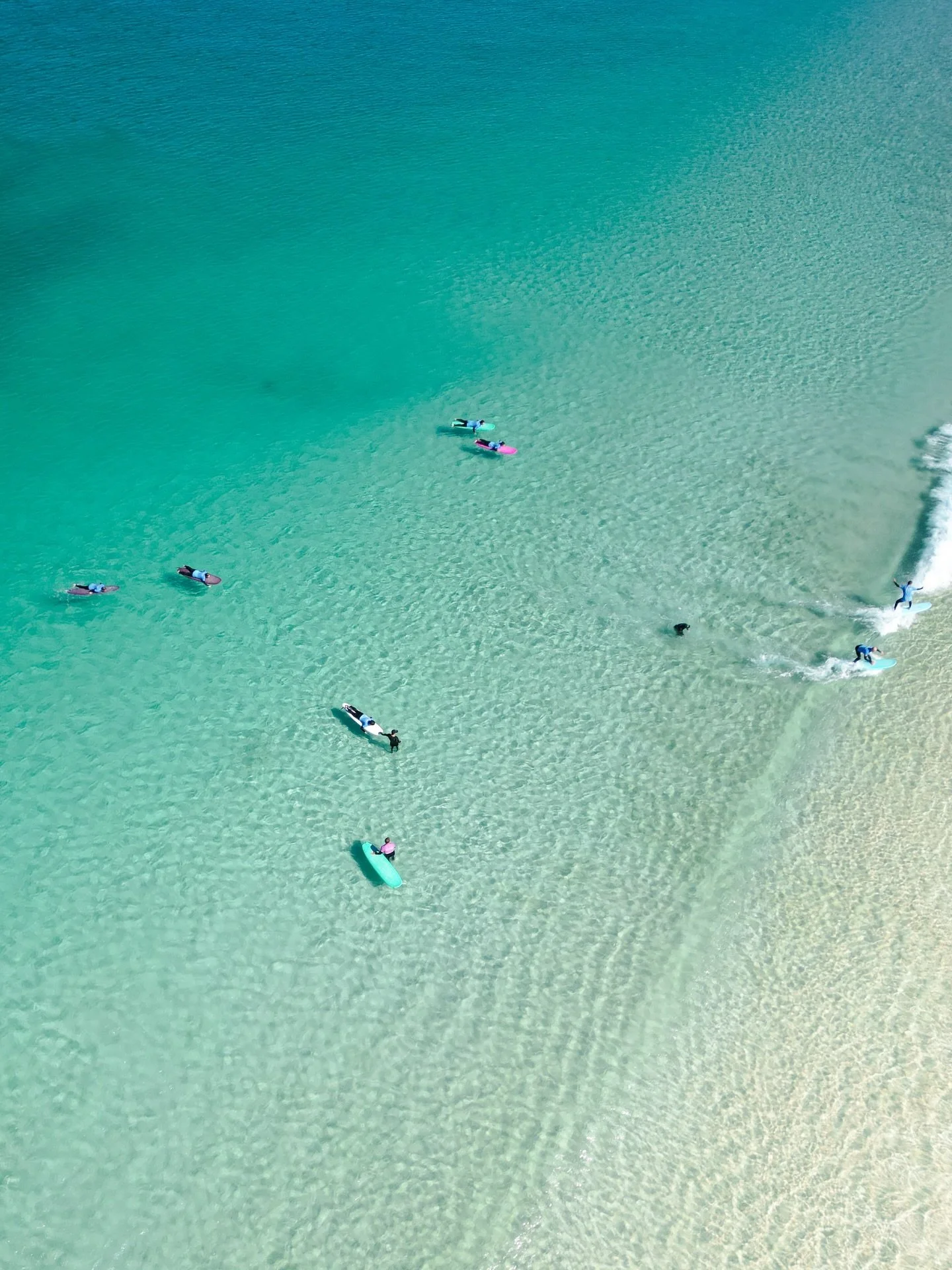
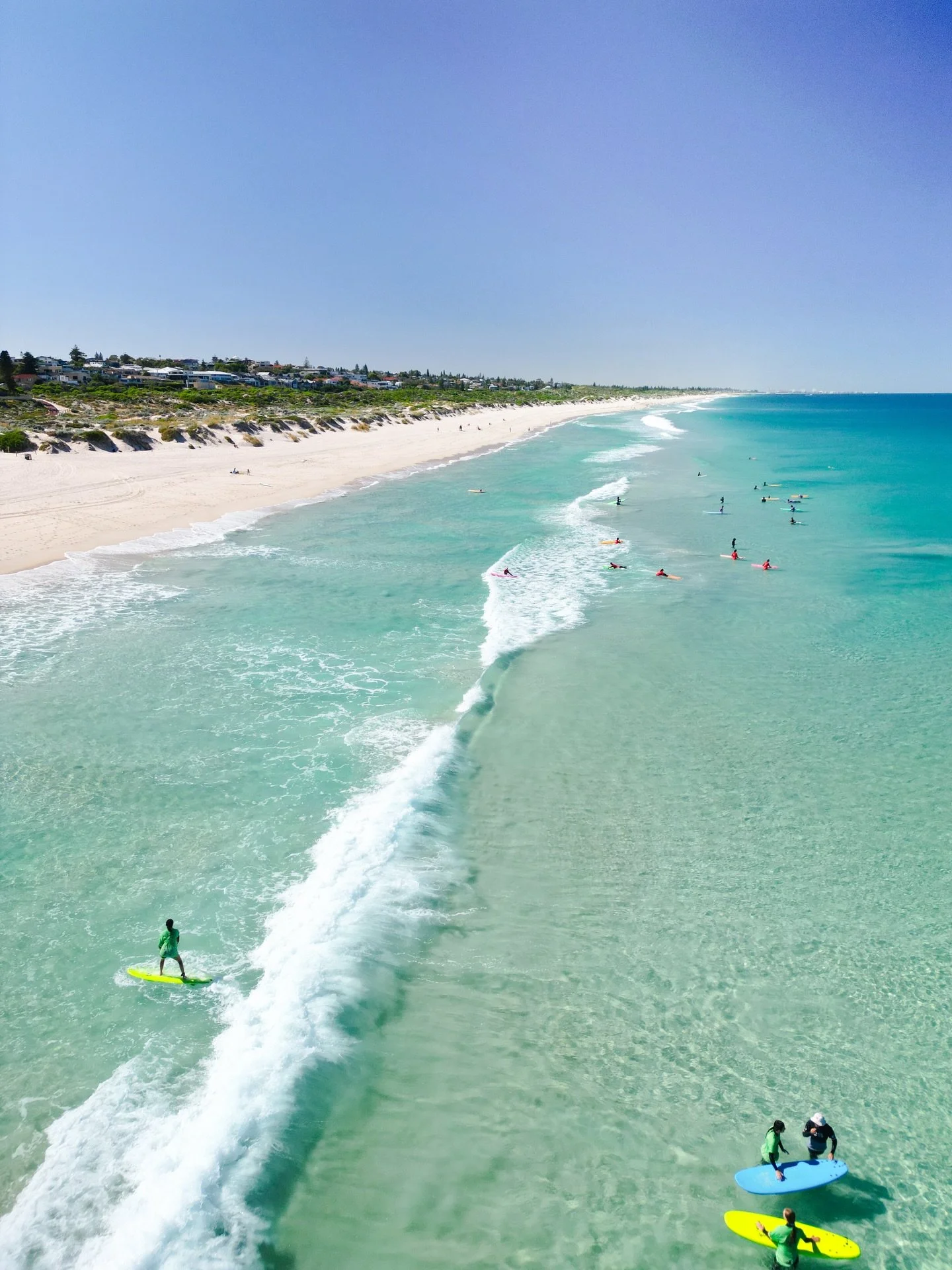
At Leighton, the sandbanks are shallower and more forgiving. You can walk your surfboard out through much of the break rather than having to paddle through it. For someone learning to surf, that changes everything. You spend more time actually surfing waves and less time battling the ocean to get to them.
The bigger the waves, the stronger the rips and lateral currents too — another reason Scarborough's winter conditions are just not suitable for lessons, regardless of how keen your students are.
As we explain in our sandbank blog article, those winter storms are also doing something valuable: they're building and sculpting the sandbanks at Brighton that will carry us through the entire summer season. The same storms that make Scarborough too powerful in winter are setting up Brighton for perfect beginner conditions come November.
Summer Wind vs Winter Wind: A Tale of Two Forecasts
Wind is the other major factor — and again, summer and winter behave very differently in Perth.
Summer is clockwork. Most days, you'll get offshore winds in the morning (blowing from land to sea, which holds up the wave face and creates clean conditions). Then, somewhere between 11am and 1pm, the famous Fremantle Doctor arrives — that reliable southwest sea breeze that Perth locals know well. When it swings onshore, the wave faces crumble and conditions become choppy. Lessons in summer have to happen in the morning window, or not at all.
Winter is different. Yes, you get storms — sometimes big ones, like the severe low-pressure system that hit in May 2026 with gusts exceeding 125 km/h and swells peaking at 6–7 metres. But between those events, the wind pattern changes completely. Perth winters regularly deliver light offshore winds that hold all day. That means we can run afternoon lessons in winter that simply aren't possible in summer. More flexibility. More lesson times. Better conditions across a longer window each day.
We Don't Move on a Fixed Date — We Read the Ocean
One question we get a lot: "When exactly do you move?"
There's no calendar date. It's a read-the-conditions call.
Usually by June, there's been enough storm activity for reliable sandbanks to form at Leighton. We typically stay there through to the end of September. October can be a back-and-forth month — we'll check both beaches and pick the best spot for each session depending on what the forecast is showing.
The signal we're looking for is simple: strong enough storms to shift enough sand to build proper sandbars at Leighton. When those form, we move. When conditions at Brighton are clearly better — we're there. Some years the transition is clean. Other years we're juggling both locations well into autumn or spring.
What You Actually Get at Each Location
Brighton Beach (Summer — November to May)
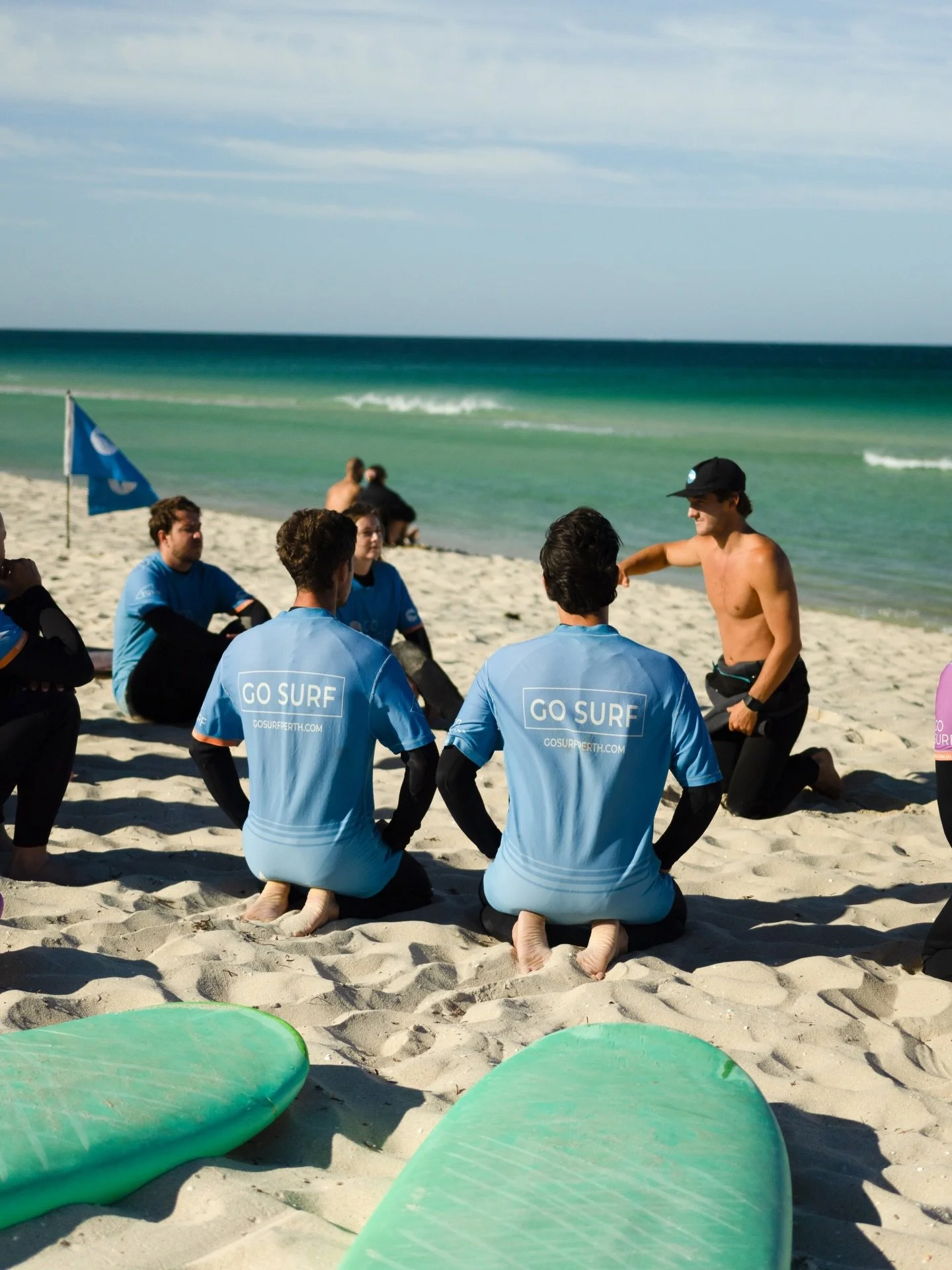
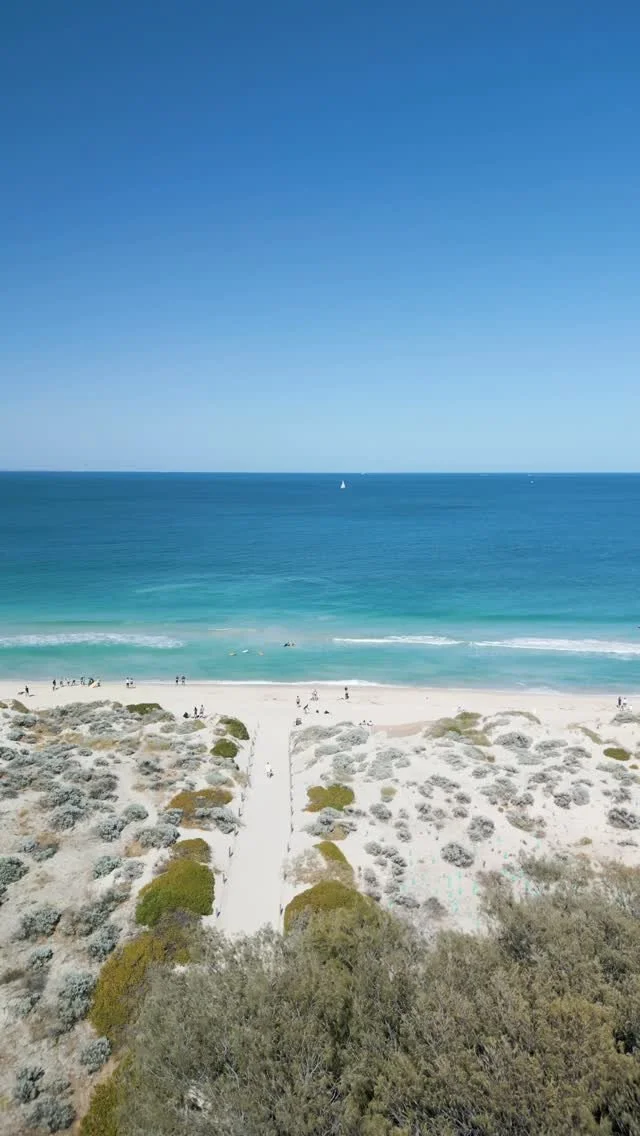
Brighton is our bit of a secret. It's quieter than Scarborough and Trigg, less crowded, and sits in a sweet spot for summer swell — enough wave energy to learn on, not so much that it becomes intimidating. The morning conditions before the Doctor arrives are often glassy and perfect. You're also close to the buzz of the Scarborough strip if you want a coffee or breakfast after your lesson.
Water temperatures in summer sit around 22–24°C. No wetsuit needed — just rash vest or boardies.
Leighton Beach (Winter — June to September)
Leighton is one of Perth's most beautiful beaches. White sand, views across to Rottnest, and a relaxed North Fremantle vibe. The waves are consistent, green, and very learnable — and because the beach draws more beginner and intermediate surfers in winter, there's a great community feel in the water.
Water temperature hovers around 18–19°C. We supply Quicksilver wetsuits so you'll be comfortable, and most students are genuinely surprised by how manageable it is once they're in.
Surfing a different location is also good for your development. Different beaches create different waves. Getting comfortable at Leighton builds adaptability that will serve you well as a surfer long-term.
And the wildlife. Both beaches give you a solid chance of seeing dolphins on any given lesson day. At Leighton, if you're lucky, you might catch a southern right whale passing through — a genuinely unforgettable experience when it happens mid-lesson.
Quick Summary: Why We Move
| Brighton Beach Summer · Nov – May | Leighton Beach Winter · Jun – Sep | |
|---|---|---|
| Swell | Smaller & manageable — ideal for beginners | Consistent SW swell, sheltered from the worst by Rottnest Island |
| Sandbanks | Well-formed from winter storms — easy to walk your board out | Shallower gutters — walk board out, no duck-diving required |
| Wind | Clean mornings before the Fremantle Doctor arrives (11am–1pm) | Light offshores often all day — afternoon lessons are possible |
| Crowds | Quieter than Scarborough & Trigg | Less crowded, more beginner surfers in the water |
| Rules | Open for surfcraft year-round | Swimming-only Oct–Apr · Surfcraft permitted May–Sep |
| Wildlife | 🐬 Dolphins | 🐬🐋 Dolphins + Southern Right Whales |
We don't move on a fixed date — we follow the ocean. Usually settled at Leighton by June, back to Brighton by November.
Frequently Asked Questions
-
For private lessons, we can sometimes accommodate Brighton Beach year-round. Group lessons follow the seasonal schedule. Contact us to discuss options.
-
Yes — water temperature sits around 18–19°C in winter, which is comfortable in a good wetsuit. We provide full-length Quicksilver and Roxy wetsuits in all sizes, included in your lesson. As we cover in detail in our winter surfing article, most students are genuinely surprised by how enjoyable it is.
-
Type "Perth Go Surf Lessons Leighton Beach" into Google Maps. We meet at the end of the car park near the Fremantle SLSC. North Fremantle train station is only a 4-minute walk away if you're coming by public transport.
-
We monitor conditions closely and will contact you if we need to reschedule. That's one of the advantages of booking online — we can reach you quickly and rebook at no cost.
-
Both seasons have real advantages. Summer at Brighton means warm water, long days, and clean morning conditions. Winter at Leighton means consistent waves, less crowded lineups, and more flexible lesson times. As we explain in our best time to book guide, there's genuinely no bad time — it really comes down to when works for you.
Ready to Get in the Water?
Whether it's summer at Brighton or winter at Leighton, we'll be out there — picking the best conditions, the best sandbanks, and the best window in the day to get you on a wave.