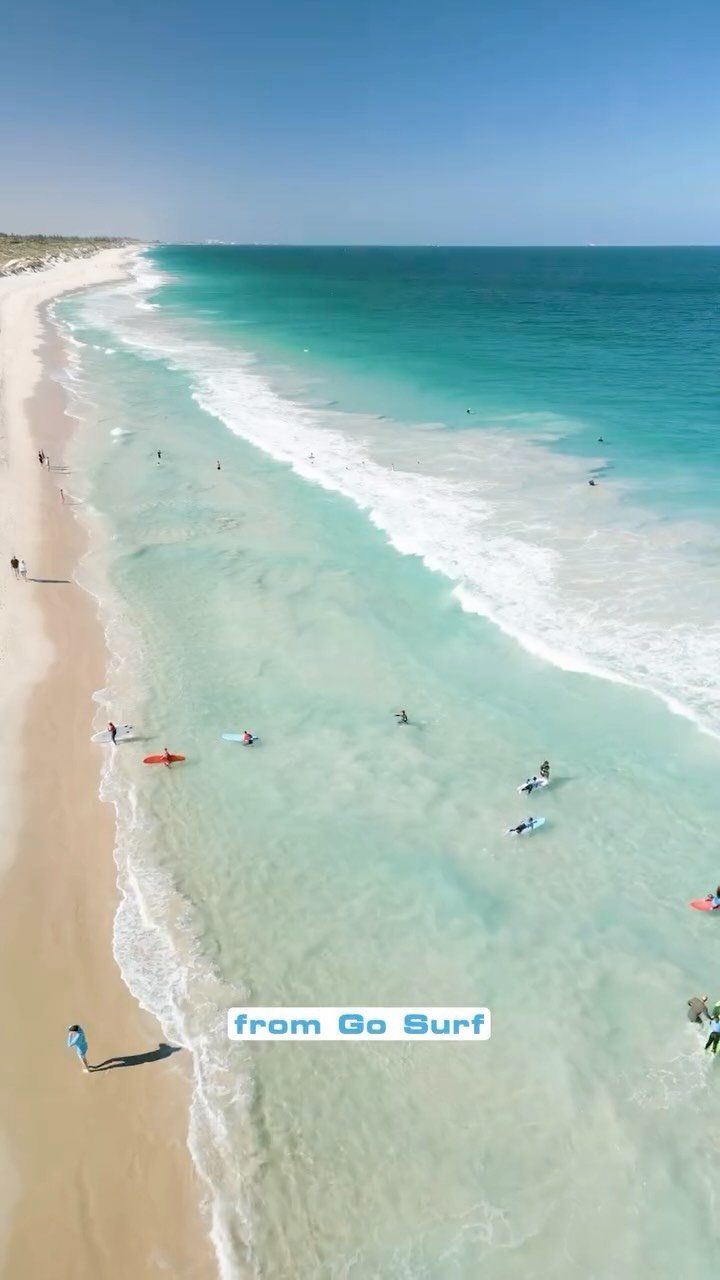
Most people stand up on their very first surf lesson. That's the short answer and it's true for the vast majority of beginners on a soft-top board in gentle whitewater.
But standing up once and actually feeling like a free-flowing, cross-stepping surfer are two different things. And the gap between them is why we decided to put pen to paper (or fingers to keyboard) and write this article.
Ever wondered whether it’s possible to stand up on your first surf lesson? Find out below!
Most people stand up in lesson one
Here's the bit that surprises everyone: You'll most likely stand up on your very first lesson.
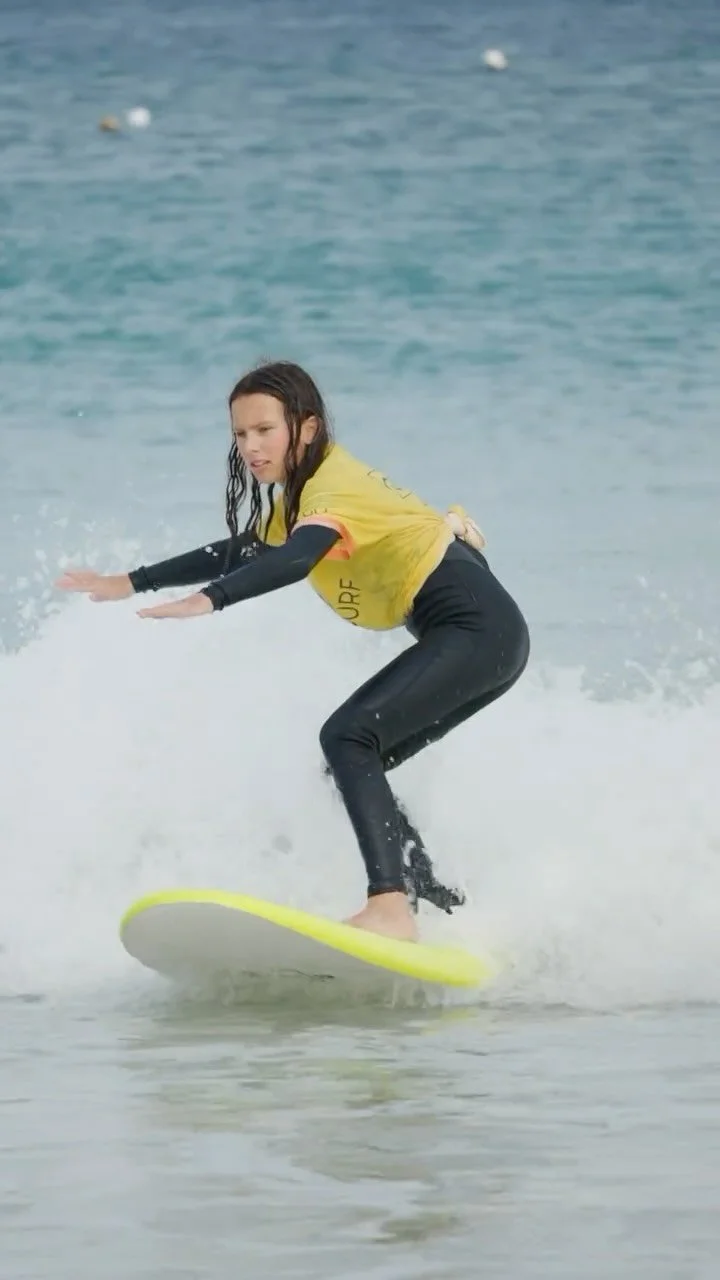
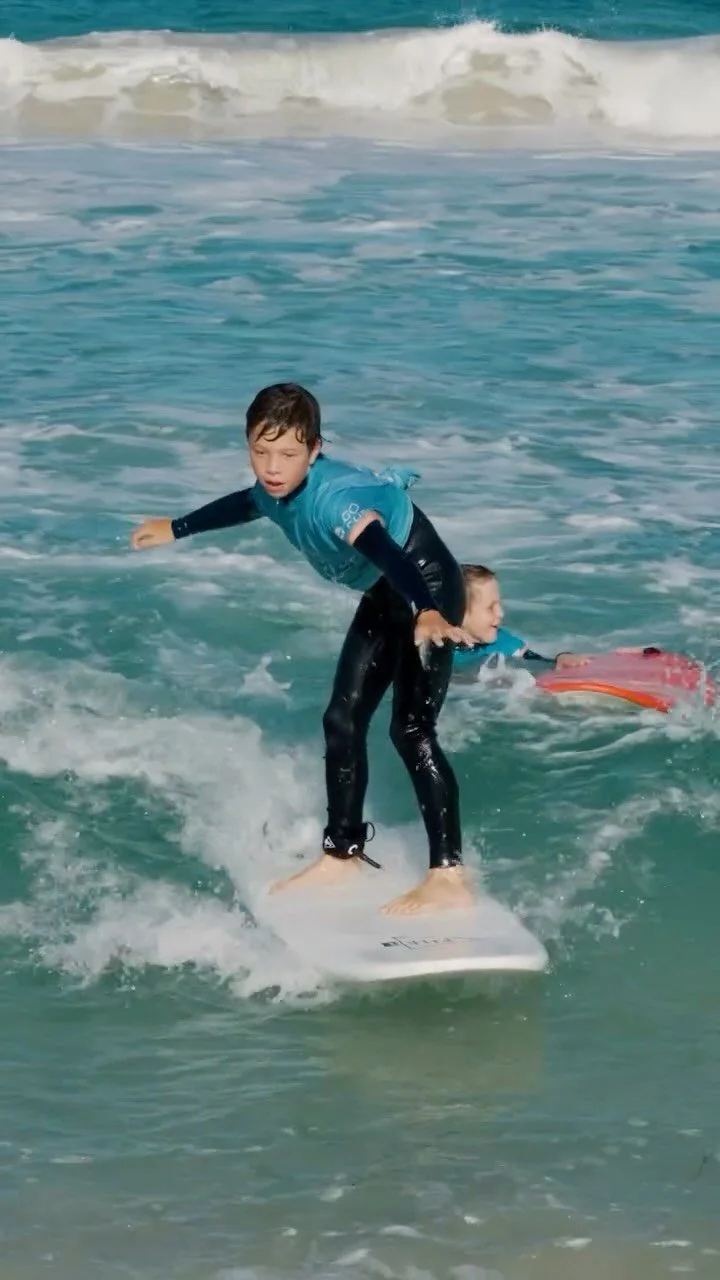
Not "after a few weeks". Not "once you've built up your core strength". But on day dot. In fact, it’s not uncommon for first-timers to pop up in the whitewater within their first session!
Some get there on their first or second wave. Others take a few goes but nail it by the end. One of our own customers put it best in a review, that by the end of their first lesson they were standing up. That's because a good lesson is built backwards from that exact moment:
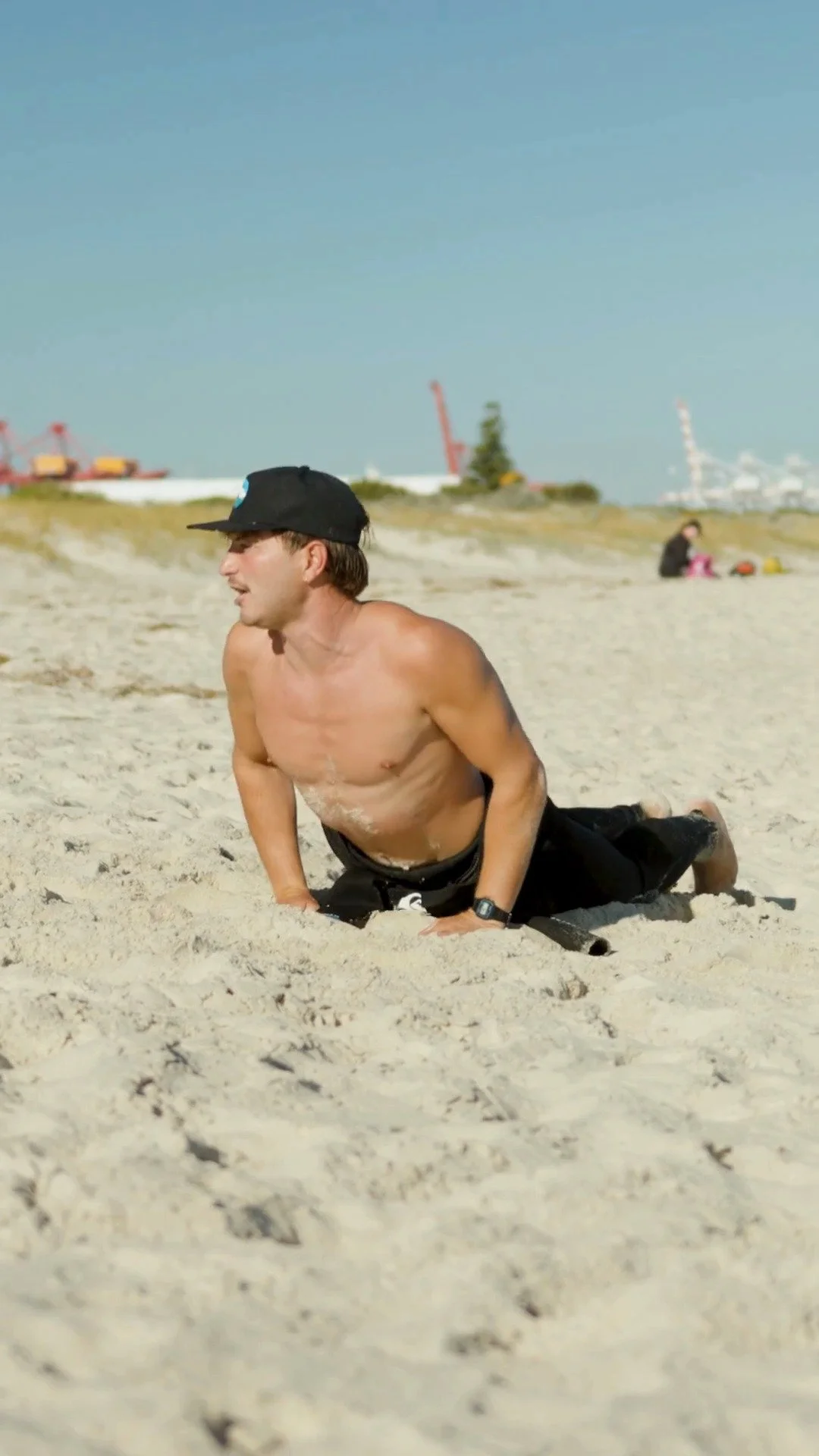
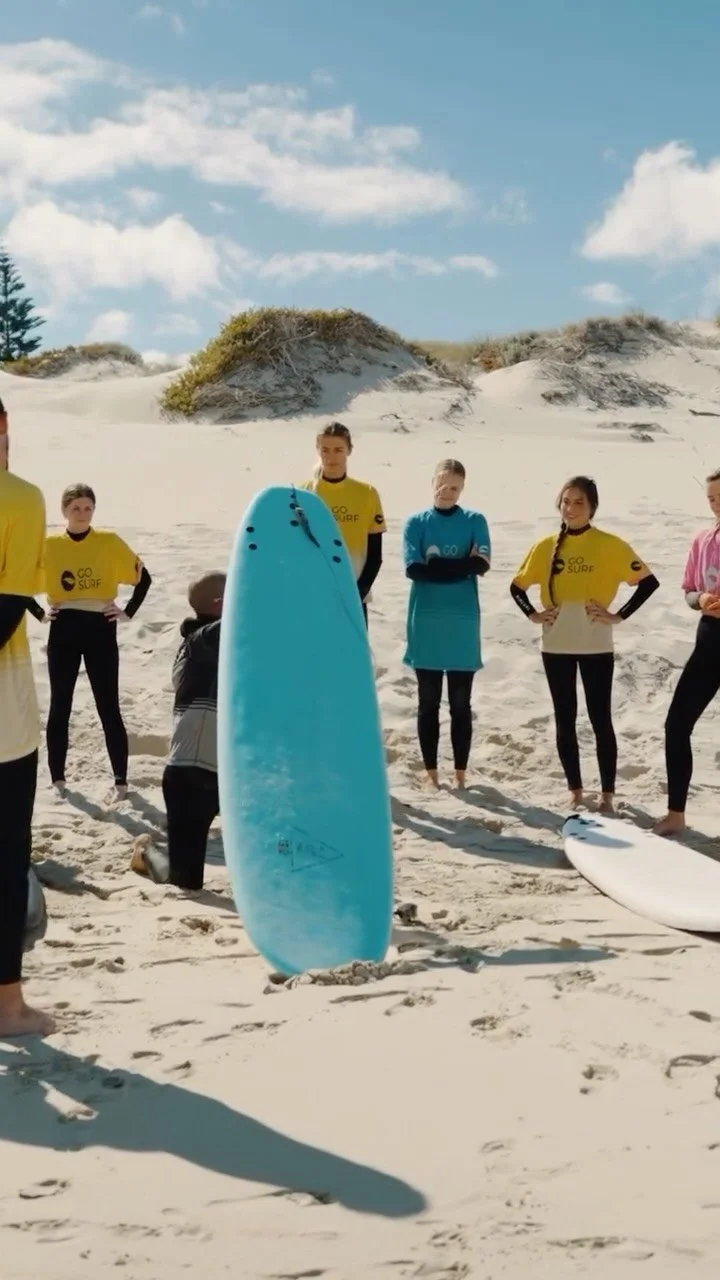
You start on the sand, learning the pop-up where nothing's moving
Your coach pushes you into a gentle, already-broken wave
You're on a big stable foam board that does a lot of the heavy lifting
All you've got to do is trust the steps
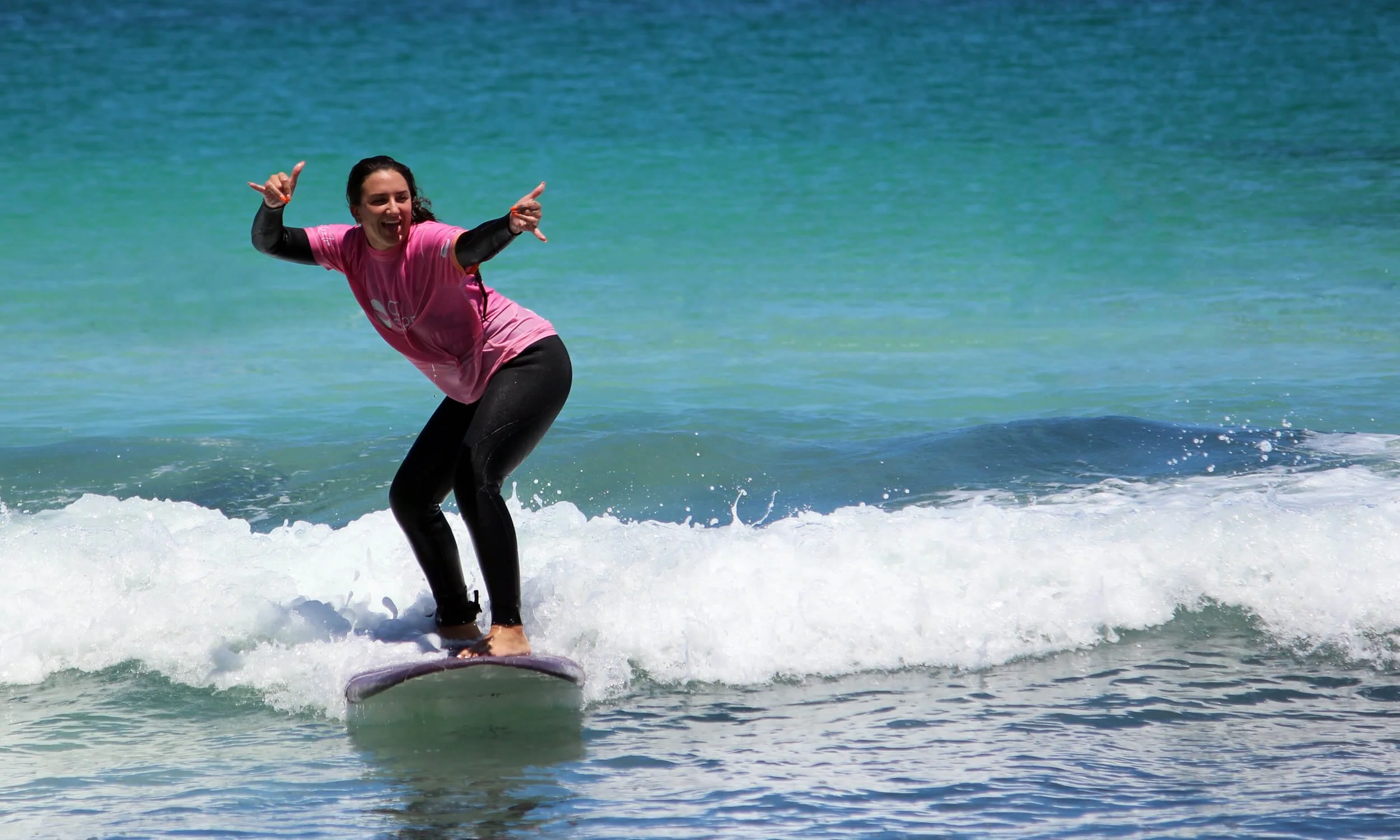
Will it be graceful? Probably not.
Most first pop-ups look like a baby giraffe trying to find their footing. But you'll be standing, don’t worry about that. And that's the whole point. Our adult group lessons are built around getting first-timers to exactly that moment.
And if you don't stand up first lesson? No sweat! Sometimes it takes a little longer and that’s totally fine too. This sorts itself out with repetition.
In our experience, the folks who stand up by lesson three are very often the same ones who didn't on day one.
Progress after 1, 3, 5 and 10 lessons
It helps to know what "good" looks like at each stage, so you're not measuring yourself against some imaginary timeline.
After 1 lesson: You've stood up on whitewater, probably more than once. You're knackered with saltwater in your nose. But… you've caught the bug. Most people leave somewhere between exhausted and grinning. Often both
After 3 lessons: Your pop-up feels less like a panicked scramble and more like a flowing, coordinated movement. You're standing up more than you're falling
After 5 lessons: This is where it gets proper fun! You're riding broken waves confidently and eyeing off the green, unbroken ones out the back. Your pop-up is becoming muscle memory
After 10 lessons: You're catching unbroken waves, picking which ones are worth going for and angling your board along the wave instead of straight to the beach. Congrats. You can now call yourself a surfer
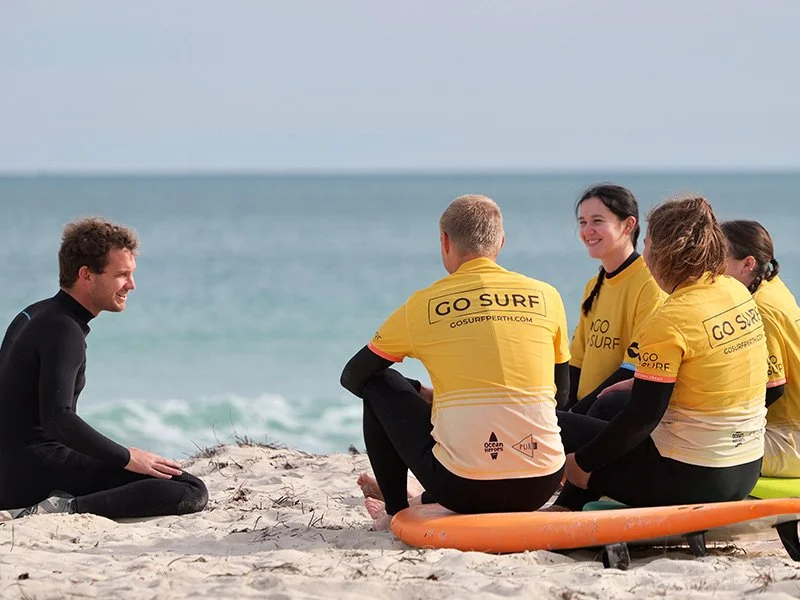
One caveat worth repeating. Your progress won’t be linear. Some days you'll feel like you've gone backwards. The next session it'll click. That's surfing.
Everyone rides that rollercoaster, including the people who make it look easy. It's also why we run multi-day course options, so you can lock in multiple lessons and build real momentum.
Factors affecting how fast you learn
If you want to be catching green waves by lesson five rather than ten, these are the things that move the needle:
Consistency beats everything: Six lessons over six weeks beats six crammed into one holiday with eight months off either side. Twice a week is the sweet spot, but again… this is personal
Transferable balance: Skateboarding, snowboarding or even yoga shortens the curve. If you've never done anything boardy, no drama. You can still pop up and ride your first wave thanks to our expert coaches
Fitness (sort of): You don't need to be an athlete. But paddling gasses everyone. At the end of the day, our boards make learning to surf super easy
The right board: A big soft-top, around 7 to 9 feet, paddles and catches waves far easier than the short, cool-looking board beginners are tempted by
If you want faster progress, our private lessons give you one-on-one feedback that fixes these habits quickly.
Why Perth is ideal for beginners
You could learn almost anywhere there's a beach. But Perth makes the whole thing easier:
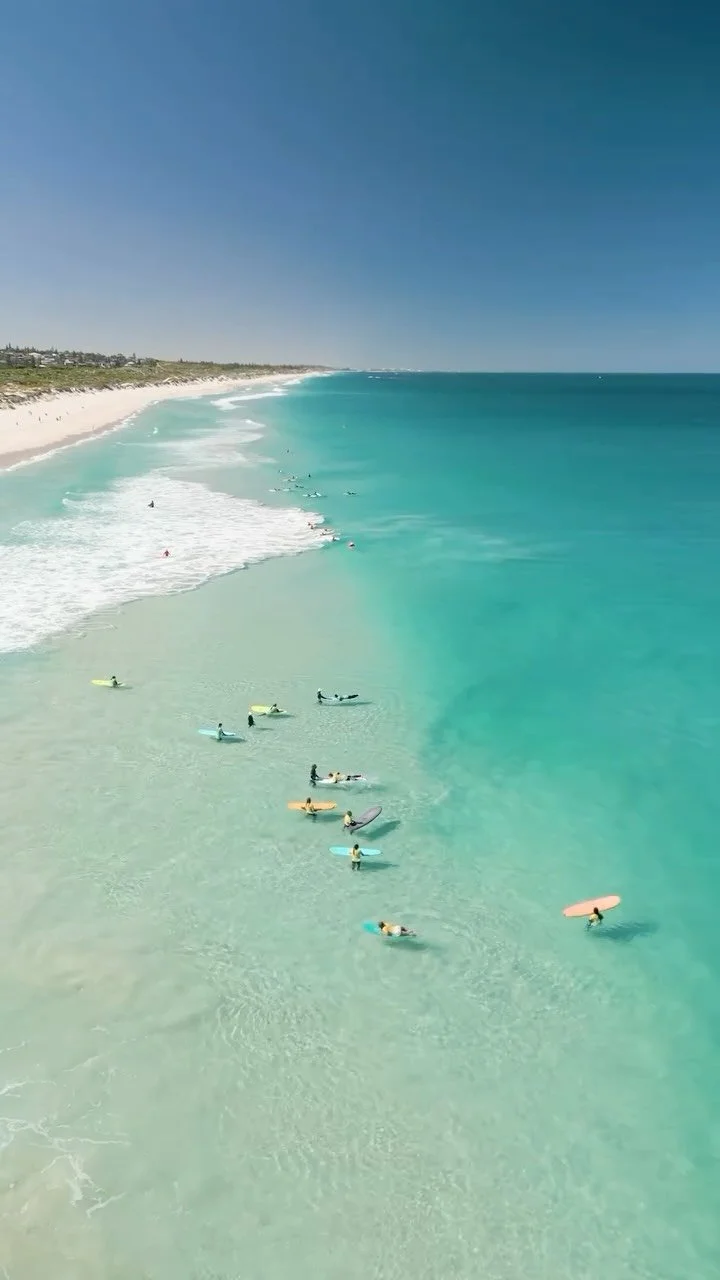
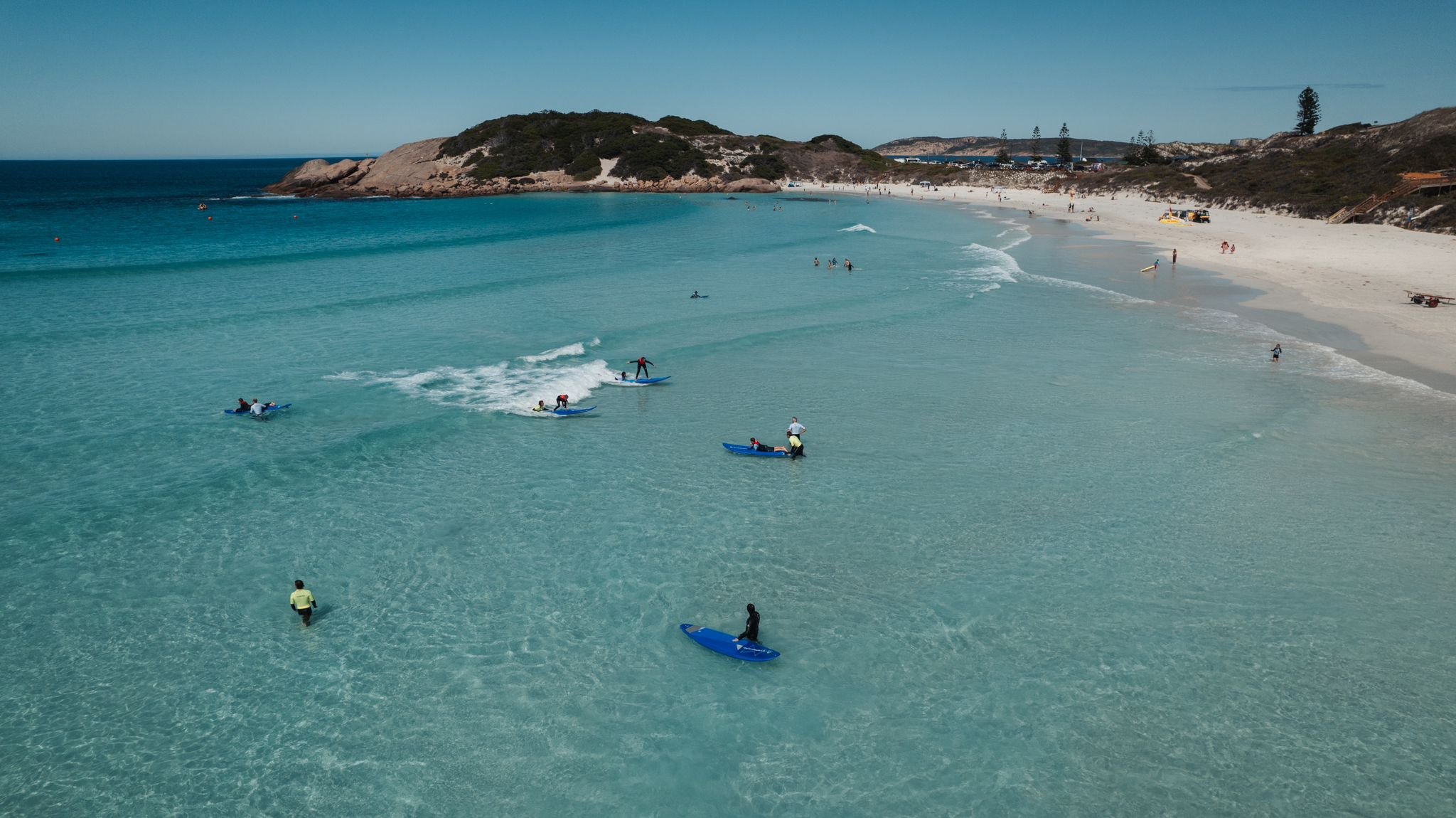
Sand-bottom breaks: Scarborough, Trigg and Leighton all break over forgiving sand rather than rock or reef. Falling on sand is far friendlier and less fear means you learn quicker.
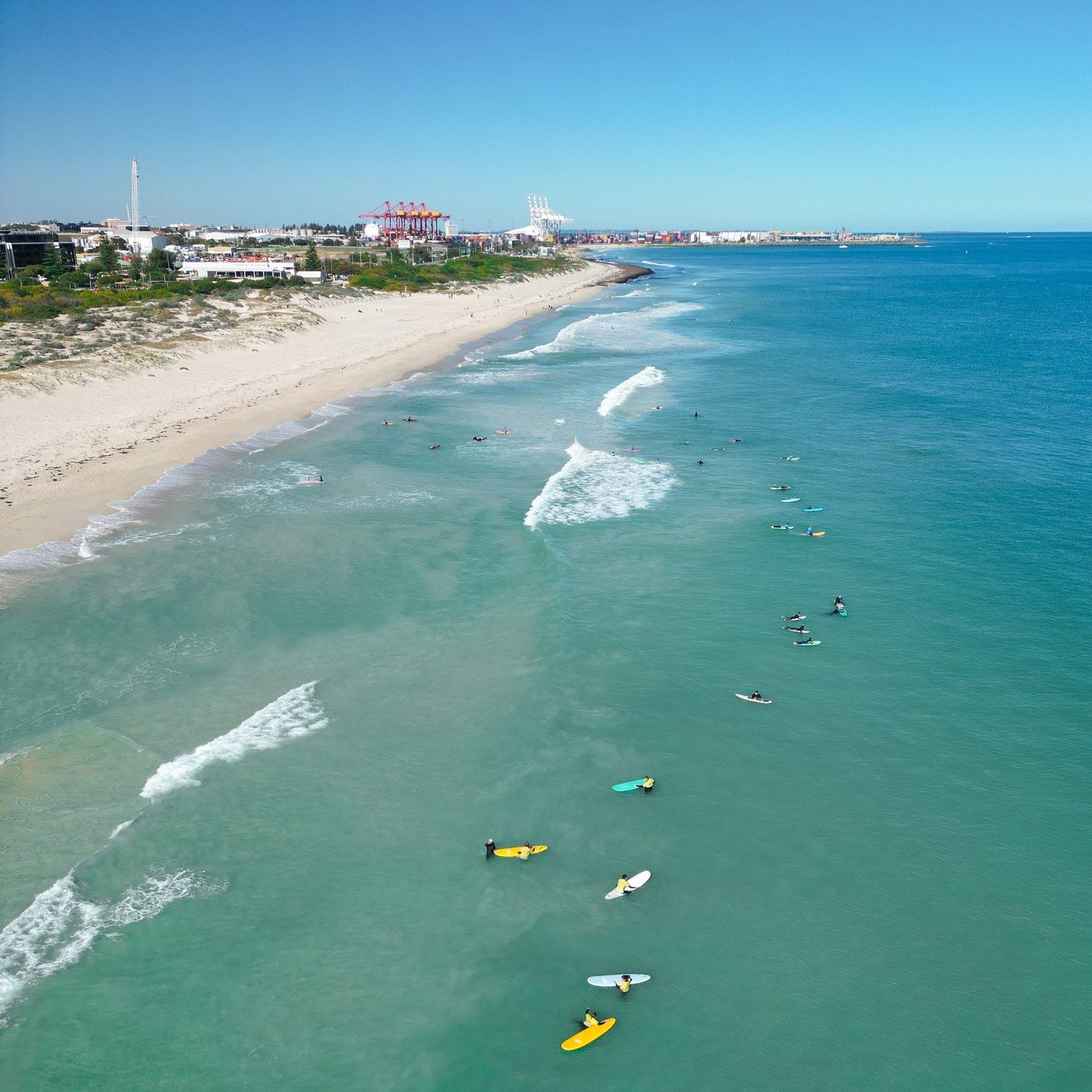
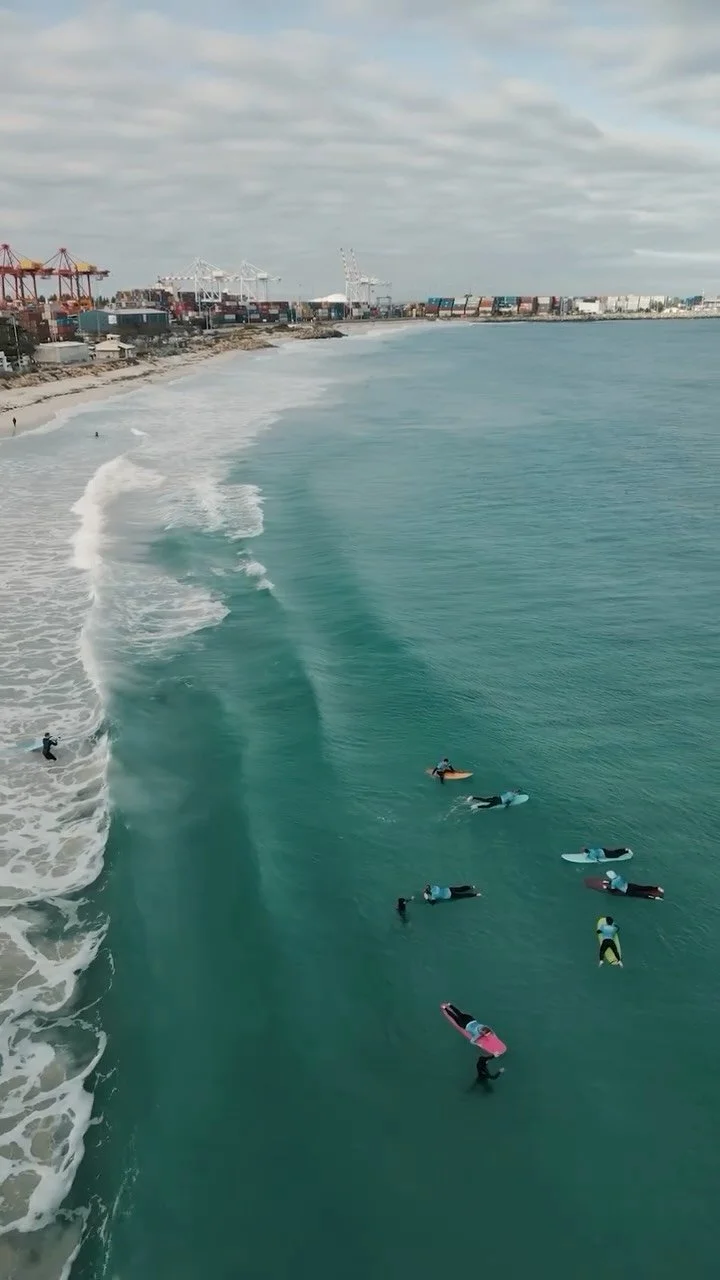
Beginner-sized waves close to shore: Scarborough's waves break on shifting sandbars near the beach, so you can walk out to waist depth and start catching white water without a marathon paddle
Clean, clear water: Perth's beaches regularly rate "good" or "very good" for water quality.
A welcoming crew: The metro surf scene in Perth is exceptionally friendly to learners
We run at Scarborough in summer and Leighton in winter, timing each lesson around the best conditions on the day.
A few common questions
Q. How many surf lessons do I need to stand up?
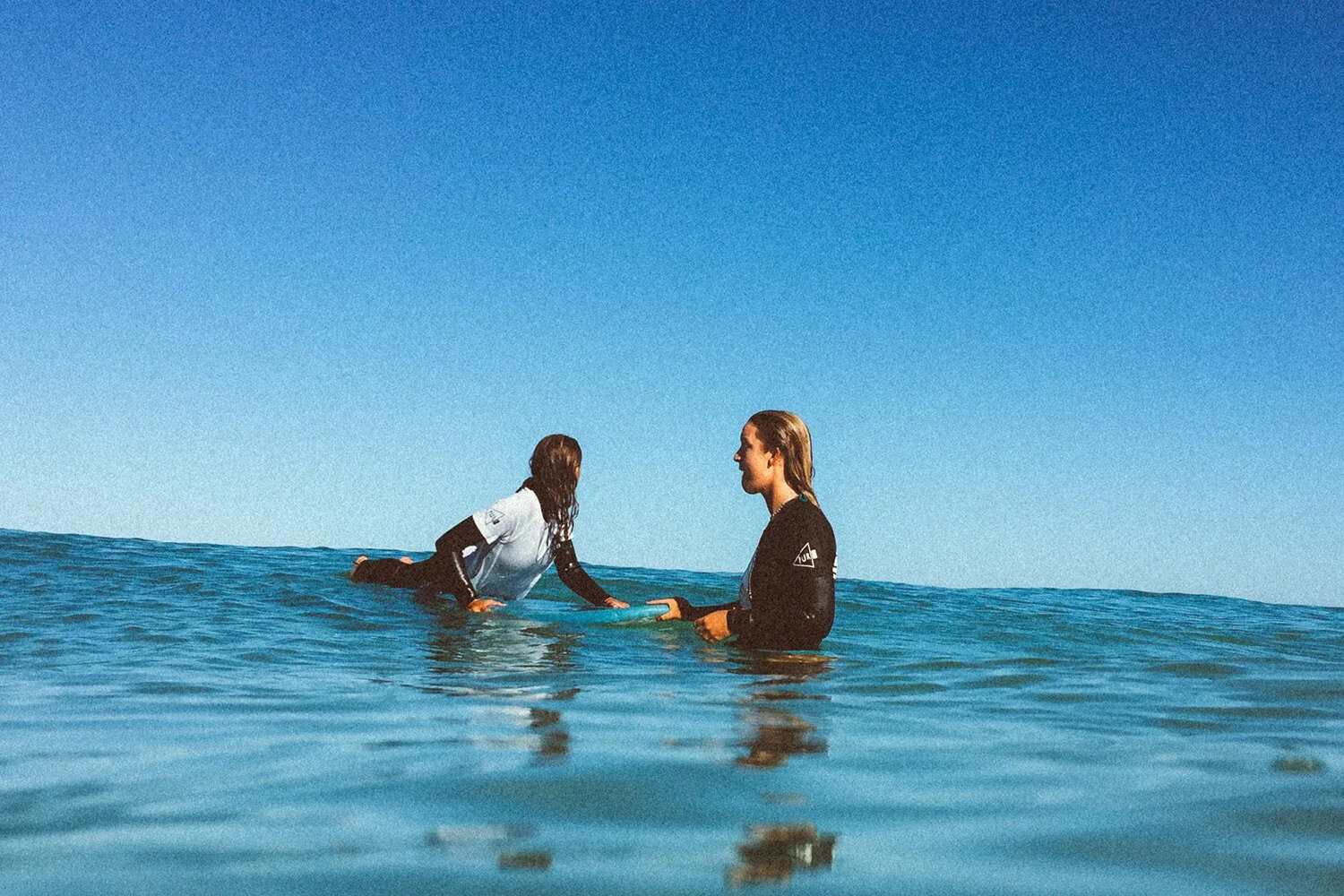
Usually just one. Most beginners stand up on a soft-top in whitewater during their first lesson.
Q. How many lessons until I can surf on my own?
This is dependent on the individual, but we reckon you’ll need around 5 to 10 sessions before you're surfing independently with confidence. You'll stand up far sooner, but reading the ocean and catching green waves solo takes longer.
Q. Am I too old to learn?
Nope! Plenty of people start in their 40s, 50s and beyond. Technique and timing matter more than age or raw strength.
Q. Do I need to be fit or strong?
No. It helps a little for paddling, but the biggest factor is practice, not muscle.
Q. What if I don't stand up first lesson?
You're probably much closer than you think. Most people who walk off frustrated after lesson one are grinning by lesson three.
Q. Do I need my own gear?
Not to start. We provide the board and wetsuit.
So… how many lessons?
Usually one to stand up. Five to ten to actually feel like a surfer with a forgiving beach, the right guidance and a bit of determination. Want to find out for yourself?
Book a lesson and we'll have you standing up sooner than you'd believe.